• Follow us

Real Estate Agents

Oct 8

Real Estate Therapy

by Mary Teresa Fowler
Real Estate Therapy

Real estate therapy is an extension of retail therapy – except the stakes are higher and there are not as many players. You will find more people buy clothes or gadgets for 'feel-good' therapy than stack up houses on their shopping list. Yet real estate therapy is a reality.

Psychological Issues

Real estate – buying and selling – is tied up in psychology as much as it is in money. More than one person moves – and moves again – and again – not out of necessity – but for psychological reasons. Often people move because they need a bigger home or they see it as an investment. Some home owners keep buying and renovating and making a profit.

On The Move

Yet there is another group of home buyers that stay 'on the move' for other reasons – a need to keep moving forward, a desire to keep up, a drive to acquire more "stuff" ( in this case, houses). Another possibility is that real estate therapy is just retail therapy - gone out of control. Of course, buyers who trade houses like shoes might be in the minority.

Playing It Cool

You cannot, however, take the psychology of 'buying and selling' out of real estate. Sellers do not want to seem too desperate to get rid of their home. Buyers do not want to seem too eager to close the deal. Both sides have to play it cool throughout the process.

Nobody wants the other side to sense their urgency or excitement – depending on your position. Buying and selling is a delicate dance. Nobody should try to step on anyone's toes. Everyone wants to come out of this 'feeling good' about the deal. It is human nature to want to feel that you got the best deal.

Buying and Selling 

'Buying and selling' is influenced by emotions. Over–priced houses belong to people who cannot let go of their emotional attachment to their home. Often sales happen because buyers have a specific vision of the 'perfect' home. Of course, they envision a "perfect life" in a "perfect home." No matter how practical you think you are, your reaction to a home has a psychological basis.

The Psychology of the Sale

Housing Bubble

Indeed, industry experts even refer to the 'psychological' stages of the market as it works off a housing bubble. The distinct stages of a housing bubble include enthusiasm, greed, denial, worry, capitulation, and loss of hope. In the 'enthusiasm' stage, lenders extend a welcoming hand to buyers.

Everyone feels feverish, everything is looking great, and everyone makes money in the second stage of the housing bubble. Yet as prices decline, people go onto denial. With regards to market psychology, there is not much distinction between the capitulation (surrender) stage and the state of despair.

Psychological Stages of a Bubble

Foreclosure

Foreclosure can be the end stage for many home owners. Since people have such intense attachments to their homes, foreclosure can be a devastating experience. On the positive side, foreclosure allows people to let go of a burden, move forward, and rebuild their lives. Yet few home owners who are in danger of foreclosure can see the positive angle. Home ownership is a psychological issue.

Psychological Obstacles of Selling

Are You Planning A Little Real Estate Therapy?

Oct 6

Home Renovation – A Real Dilemma

by Mary Teresa Fowler
Home Renovation Dilemma

'Renovation' is a powerful word. It can send chills down your spine or fire up your creative urges. Yet renovation is not a 'black and white' issue. Even a minimalist style can have a touch of drama! There is always a grey area. Should I or shouldn't I?

A Real Dilemma

Whether you are a home buyer or home seller, nobody escapes the 'renovation' question. Will I renovate before I sell my home? Should I buy a bargain and bring it back to life? Will I be able to afford this home when I factor in improvements? Home renovation poses a real dilemma.

Home Buyers

If you buy a home and plan to fix it up, you have to be prepared to live with chaos. The home buyer must be able to handle the 'process' and renovation can range from a mild inconvenience to an intolerable situation. Bathroom renovations come to mind.

'Fixing up' a home can take its toll. Sometimes home owners have to seek out other accommodations while the work is in progress. If individuals have allergies or breathing problems, hotel costs seem a small price to pay to protect one's health.

Yet all renovations come with a cost – quite possibly, a considerable expense. Home buyers need to think about resale values – especially in an uncertain economy. Before home buyers decide on improvements, they must be clear about the cost.

A home inspector can shed light on that area. Be warned, however, that it can be difficult to get enough financing to handle a massive renovation. FHA 203k loans are available (with certain restrictions) for homebuyers who want to make immediate home improvements.

"In this market, you need to be very careful about how much cash you invest to make sure you get that back in resale value," Valerie Huffman, a regional vice president and manager of the Bethesda-Chevy Chase office of Weichert Realtors.

Cost-saving found in more than price

Home Sellers

Home sellers also have to confront the renovation dilemma. Should they renovate before selling or will they just sell at a bargain? If a house is not up to the standard of neighborhood homes, renovation is a wise idea.

If your home is on the market, you do not want to have the worst house on the street. Even when a home is selling for a lower price, the 'below standard' house might not attract buyers. They might decide to pay a little extra and avoid the hassle of renovations.

Removing 'dated' features is a good plan. A 1970s kitchen will not excite the 2010 home buyer. Of course, kitchen renovations are a huge commitment. You have to consider your budget, time constraints, and willingness to live with the upheaval.

Minor renovations can make a big improvement at a low cost. A 'lighter' look is always appealing to home buyers. A fresh and airy feel is a welcoming touch but go easy on bold and bright shades.

You might think that vibrant red would jazz up your space. Remember though that you are the seller and therein lies the root of the real dilemma. People tend to decorate in their preferred style but home sellers must renovate to attract home buyers.

Renovating to Sell

Are Home Renovations Posing A Real Dilemma For You?

Oct 4

Looking Good in Dubai

by Mary Teresa Fowler

Many things look good in Dubai – at least, according to tourist statistics. Dubai is the one of the most visited cities in the world. As one of the seven United Arab Emirates (UAE), Dubai is expecting to accommodate 15 million tourists by 2015.

Looking Good

Everything looked promising today as Cityscape Global 2010 (the world’s largest business-to-business real estate investment and development event) opened in Dubai. Sheikh Maktoum bin Mohammed bin Rashid Al Maktoum, Deputy Ruler of Dubai, presided over the opening ceremony of Cityscape Global at the Dubai World Trade Centre. The city has hosted this event for the past nine years. This four-day show spotlights emerging trends around the globe.

No Problems

Within the next two years, residential property prices are expected to stabilize in Dubai. Once again, investors are taking a serious look at the city's real estate. A leading consultant firm does not foresee any problems with the Dubai market.

“As long as the property supply doesn’t surpass the demand too much, we should see a stabilization of Dubai’s residential property prices within the next two to three years," explains a major consultant firm.

New Developments

By the end of 2011, Dubai is expected to see 50,000 new residential developments. Maybe the scale of development will not reach that exact number. Yet developments are now in the works that were on hold. As well, many buyers say that they plan to stay in Dubai for at least 3-5 years. Despite the downward trend in the past six months, things are looking up for this United Arab Emirate. An industry leader offered an explanation for the decline in Dubai residential rentals and sales in recent months.

"This downturn probably was mainly due to the holy month of Ramadan and summer vacations as well as buyers adopting a wait-and-see attitude. Many of the prudent investors were in anticipation that the prices would fall further, or the mortgage rates would get cheaper,” said a top consultant.

Good News

Banks are lowering mortgage rates in Dubai – sometimes to 5.99 per cent. The good news for Dubai buyers is reflected in pockets elsewhere around the world but Dubai is the darling in development at this time. Recently, there have been major encouraging announcements including today's news that the Real Estate Regulatory Agency would work with banks to raise up to $1.36 billion to finish 48 developments.

Emerging Trend

The truth is that mature economies are finding it difficult in recent years. Heavy debt is always a major issue – whether you are an individual or a mature economy. Developing economies are not burdened with that degree of debt and, therefore, they can grow at a faster rate. Rapid growth means higher returns and that fact is not lost on investors who are eyeing the Dubai market.

Dubai's residential sector in recovery mode

Eyeing Dubai

The Dubai real estate market looks attractive to investors and, no doubt, the city is a favorite with tourists. Yet the best measure of a city is how it cares for and nurtures its residents so that 'everyone' can live a productive and pleasant life within its boundaries.

Do You Have Your Eye On Dubai?

Oct 1

Home Sellers' Top Mistakes

by Mary Teresa Fowler

Selling a home has never been an easy process. It requires effort and commitment at the best of times. In today's market, however, selling a home can be much more of a challenge. Yet home sellers can put themselves in a favorable position. They have to know how to adapt to today's economic climate. Many home sellers make serious blunders and end up waiting much longer to sell their homes.

Selling a Home – Top Mistakes

1. Pricing Too High

Although it may be tempting to try to get as much as possible for your home, that strategy can backfire on a seller – especially in the current economy. If similar homes in the neighborhood are going for a lower price, you will be last on everyone's list. The worst scenario - you end up getting less than your neighbors for a home of equal value. Over-pricing in an uncertain economy will not help a home seller – although the neighbors might be more pleased than ever with you. Home sellers must remember that they are still competing against bank-owned homes, short sales, and HUD (US Department of Housing and Urban Development) homes.

2. Expecting Too Much

People have to lower their expectations in poor economic times. Sellers have to look at the situation in the 'here and now' - not last month or last year. Today's sellers may not be able to take home their expected profit. In the midst of financial instability, sellers have to adjust their thinking.

Don't get carried away with slight improvements in the economy. When a country is coming out of a recession, people are still nervous about their financial future. Obviously, home sellers share that concern. Yet they must be realistic about the situation. It might help if sellers consider how they would react if they were home buyers. That mental exercise may help sellers to get a realistic view of today's marketplace.

3. Selling A Loser

Don't try to sell a loser! Of course, there is nothing to stop you from putting a home in poor condition on the market. Just don't expect to get a good price for it!

Condition matters in selling homes and no hefty price tag is going to hide that fact. If it isn't a winner, don't price it in that category. People will see right through that scheme. Sell for a fair value or make improvements and be able to sell for an increased profit.

Actually with FHA appraisals, major repairs have to be fixed up-front. Home buyers won't be eager to buy houses with bad roofs or safety issues. If sellers want to get rid of a home in poor condition, they can expect to have to accommodate buyers. Sometimes sellers decide to give a credit for a major repair (such as roof repair) after pricing it out. Generally though, a home in bad condition has to either sell for less or the home seller has to be willing to invest in improvements.

4. Neglecting Curb Appeal

Many sellers overlook the definite appeal of "curb appeal." Some sellers seem to think that it is just a term from a home decorating television show. Curb appeal, however, deserves more than a passing mention. The TV decorators are right about this one. Curb appeal matters to potential home buyers and it can translate to extra cash.

Traditional sellers: Strategize before selling, say Realtors

What Do You Think Is A Home Seller's Top Mistake?

Sep 29

Home Buyer Education Programs

by Mary Teresa Fowler

Today's home buyers are facing a different marketplace than home purchasers in past decades. Even if we look at home buyers during previous economic downturns, today's buyer is not living the same reality. Yet a glaring similarity exists between modern home buyers and purchasers in other decades (or even - centuries) in US history. Home buyers have a dream.


Home Buyer Education Programs

Another fairly common thread between home buyers of the past and present is the challenge of turning that dream into a reality. The path is not always as clear as the dream. In fact, more than one financial expert is convinced that many people do not understand the home buying process. A few US and Canadian organizations are addressing this issue with the introduction of Home Buyer Education Programs.

Realizing The American Dream

Beginning in October, Freedom Debt Management, a non-profit in Boca Raton, has partnered with Citi Group to begin a Home Buyer Education Program. This initiative will help South Florida first time buyers. The company hopes to help 100 families within the first year. Appropriately, the education program, consisting of two four-hour courses, is called, "Realizing The American Dream."

Existing Need

Some people may argue the value, or indeed, the need for such Home Buyer Education Programs. Yet online forums alone suggest that many first-time home buyers are not savvy about the process. Organizing these programs is not being condescending towards the first-time home buyer.

The simple truth is that if individuals never traveled a certain path, or doesn't know the way to get there, they cannot arrive at their destination – at least not in the most efficient manner. Yet some observers question how much first-time home buyers can learn in eight-hour sessions. If the program is well-organized and has valuable content, there is, however, no doubt that a home owner comes out with a better advantage.

The Program

The director of the Boca Raton program explains that their initiative enhances people's concept of saving and budgeting. In addition, the program focuses on possible credit traps, scams, and other threats to one's financial future. Class topics include mortgage affordability, understanding credit, getting a mortgage loan, shopping for a home, and keeping a home, as well as other related subjects.

"Strong financial skills can lead our residents to be able to buy homes, be prepared for financial emergencies, and be more comfortable in retirement, which leads to a stronger and healthier community. We are here to help our residents get their financial future in shape!” says Darish Still, Director of Counseling with Freedom.

Freedom Debt Management, Inc. offers homebuyer education program

Educating The Nation

Of course, Boca Raton is not the only city with a Home Buyer Education Program. The courses (or shorter but similar workshops) are in operation across the US in places such as Stockton and Norwalk. Canadian first time home buyers are also attending classes. Tarion Warranty Corporation offers online New Home Buyer Education Seminars online to help Ontario first-time home owners understand the warranty process and coverages with new homes.

Online education available for new home buyers 

Do You See Value In Home Buyer Education Programs?

Sep 27

FHA Short Refinance Program

by Mary Teresa Fowler

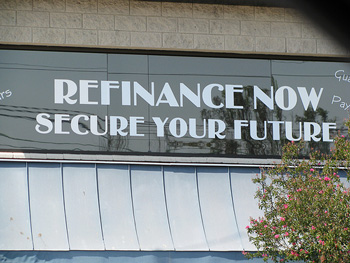
The FHA (Federal Housing Administration) Short Refinance Program, an initiative to help qualifying underwater US home owners, came into effect on September 7, 2010, and is set to run until December 31, 2012. The program will help home owners who owe more on their mortgage than the worth of their home. To qualify, borrowers must be current with their monthly payments.

Low Demand

Many home owners find themselves 'underwater' as sale prices in some areas have fallen more than fifty per cent. Within some US counties, more than half of home owners find themselves 'underwater' and in danger of losing their homes. Yet despite the number of financially-strapped families, lenders are not noticing a huge demand for this program. Of course, the FHA Short Refinance Program is a voluntary program but still a greater response was expected to the initiative.

Big Benefits

Taking part in this program can result in a considerable drop in one's monthly mortgage payment. Participating lieu holders must write down a borrower's mortgage – at least by ten per cent. Yet to date, there are few takers for the FHA Short Refinance Program – at least compared to the number of home owners who owe more than their home value.

Borrowers

Maybe all home owners are not aware of the benefits. The program has just gone into effect in recent weeks. As well, it targets a specific group – not all 'underwater' home owners.

The lack of response may also be attributed to the specific guidelines of the program. Many home owners are, however, eligible for help. Yet if individuals are delinquent on their mortgages, they do not qualify for assistance.

"…This group is in a "less serious" situation than borrowers who are already delinquent on their loans. But there's no question eligible homeowners would benefit from assistance," says Jill Perry, Northern Nevada director of Consumer Credit Affiliates.

Eligibility

To be eligible for the FHA Short Refinance Program, homeowners must be able to refinance under FHA. They must be current on their existing non-FHA-insured loan payments, use the home as their primary residence, and have a FICO credit score of 500 or above, as well as meet standard FHA underwriting requirements.

Lenders

In addition to hesitant home owners, not all lenders are embracing the program. Keep in mind that this initiative is also voluntary for lenders. Banks may not be ready for a while to refinance loans through this program.

Yet it makes sense for lenders to be participants. The hope behind the initiative is to stop foreclosures and help home owners stay in their homes. Obviously, this program will cost lenders but the expense is insignificant compared to the cost of foreclosures.

"…Servicers ought to be motivated by their best interest," says Bob Ryan, chief risk officer for the Federal Housing Administration.

Goal 

There is divided opinion about the level of assistance that this program will provide to US home owners. The government hoped that 500,000-1.5 million homeowners could be helped by the FHA Short Refinance Program. Yet industry analysts think that the program will assist only 200,000-300,000 home owners. Since the program is not yet even a month in operation, it is difficult to make an accurate prediction about the end result. Hopefully, all eligible home owners become aware of this new plan and are able to receive relief from it.

The FHA’s ‘Short Refinance’ Program: Frequently Asked Questions

Do You Think That The FHA Short Refinance Program Provides Enough Relief?

Image courtesy of flickr.com

Sep 24

Commercial Real Estate - Still In Business

by Mary Teresa Fowler

Decreased Demand

Commercial real estate has not been doing much business during the economic downturn. When businesses are closing and joblessness is rampant throughout the country, the demand for commercial space decreases except in a few big cities that weather the economic storm. Start-up businesses (except in specific categories) are few and far between during poor economic times.

Scarcity of Start-Up

Home businesses tend to be on the rise in dismal economic climates. Often unemployed workers try their hand at starting their own venture. Yet home businesses do not require extra commercial space. As well, more lenders set up during economic turmoil to take advantage of the financially-strapped individual's need for cash. Yet this type of lender may run a temporary operation.

Dealing with the Aftermath

Commercial real estate does not thrive in a recession. In fact, commercial space is not in big demand during the aftermath of economic upheaval. Things are still tight, joblessness remains an issue, and people are wary of their financial future.

Attracting New Tenants

Yet commercial real estate is still in business because the sector has no place to go only 'up' in terms of performance and profit. During difficult times, business brings out all the stops to attract new customers. Landlords are now lowering rents and making more concessions to tenants.

"...This is very much a tenant's market, which is quite favorable for businesses that are considering expansion...," says NAR chief economist, Lawrence Yun.

New Development

Development is expected to bounce back in this buyer's market. In a survey conducted by the Society of Industrial and Office Realtors, 57% of the participating 600 market experts predicted improvements in the office and industrial sectors in the coming months.

Commercial real estate remains soft but favors expansion

Office Space

Vacancy rates in office space are starting to level off and should improve dramatically by the end of 2011. Certain cities including New York City, Long Island, N.Y., and Honolulu had low vacancy rates in the office sector during April-June 2010.

Business in the Big Apple

It is no surprise that New York City, a global centre, fared so well in the findings. Studies have shown that more corporate travelers are visiting this thriving metropolis. In fact, a recent report about the NYC hotel industry indicates that Manhattan hotels had more than 90% occupancy rate in May 2010. Business is booming in the Big Apple.

Manhattan Hotel Industry in NYC - Manhattan Report 2010 - Second Edition

Rent Reduction

Of course, office space looks more appealing these days - especially with the offers of reduced rent. The cost of rent for office space is expected to fall 2.7% throughout 2010 and an additional 2.1% in 2011. Based on 57 markets, the vacant 13.6 million square feet of office space in 2010 will be replaced by 22.6 million square feet of occupied office space during 2011. This positive projection focuses on existing office spaces as well as new spaces coming on the market.

Industrial Space

Industrial spaces are expected to follow a similar trend as office space. During the coming year, industry leaders predict a .4% drop in vacancy rates for industrial space. That trend will continue throughout 2011. Industrial rent will decrease by 5.4% in 2010 and experience another drop of 4.7% in 2011.

Is This The Right Time To Invest In Commercial Retail Space?

Sep 23

How To Prepare to Buy a Home

by Mary Teresa Fowler

Buying a home should not start on the day that you begin looking at houses. Surprisingly, some home buyers go that route and do not prepare to make the purchase. If individuals don't get ready for a home purchase, they will find home buying much more stressful than the prepared buyer.

Buying A Home = Hopes and Dreams

Everyone recognizes home buying as a major commitment. Yet purchasing is a home is also tied in with emotions and hopes and dreams. Some potential home buyers let their emotions get the better of them. They do not focus on the financial and other practical details involved in buying a home.

The unprepared buyer can end up finding the perfect home and then realizing that nothing is in place for the purchase. When the prepared buyer finds the perfect home, everything that needs to be in order is organized at that point. The prepared buyer can enjoy the experience of finding their dream home and will proceed with relative ease through the home buying process.

Preparing to Buy a Home

1. Down Payment

Most home buyers cannot put together a down payment at a moment's notice. A down payment is a substantial expense. The amount varies according to the loan, lender, and loan program. It can be as low as 3.5% of the home's purchase price for FHA (Federal Housing Administration) loans. Down payments, however, can also be as high as 20% of the purchase price. Wherever the amount falls, the down payment reflects a percentage of the sale price of a house so home buyers have to be prepared to pay a hefty sum.

2. Closing Costs

Often first-time home buyers are surprised by the closing costs. Of course, sometimes the seller will offer to help with this expense but this scenario happens mostly in a buyer's market. Home buyers are advised to include closing costs in their budget. They can expect to pay in the range of $2700 in the US market.

3. Credit Rating

Home buyers should enter into the process with the best possible credit rating. If an individual is thinking about buying a home in the near future, they should check their credit rating – preferably, a few months in advance. Being prepared with that information means that a potential buyer has the chance to improve their credit rating.

4. Pre-approval

Pre-approvals for loans give a positive edge to home buyers. Having a pre-approved loan makes it easier to negotiate and arrive at a deal. Home sellers respond well to potential buyers with pre-approvals in hand.

5. Moving-in Expenses

Obviously, home buyers have to factor moving-in expenses into their budget. These costs can include the actual 'moving' as well as new furniture expenses or necessary renovations. Some shopping for furnishings and changes to a house can be deferred until after a home buyer settles into their new home. Yet some things have to be taken care of before a buyer moves into a new property. If basic furniture is needed or renovations are necessary to accommodate young children, these concerns have to be looked after before the move.

What Do You Think Is The Most Important Step In Preparing To Buy A Home?

Sep 20

Fall Home Show

by Mary Teresa Fowler

With the official start of autumn shortly upon us, home fall shows are showing up everywhere and these annual events draw huge crowds. Some things about fall home shows always stay the same. You are bound to see warm touches and shades of pumpkin. Yet every fall season brings a new and bountiful crop of home décor trends. Surprisingly, some fall home shows even emphasize spring designs.

Spring in Fall

People who look at home furnishings in fall might be preparing to build a home in the coming spring. Therefore, it is not that unusual to see fall home shows include some spring-like styles. Maybe a few pale pastels might find themselves in the company of autumn orange.

Autumn Green

Yes, green is the color of renewal and rebirth, but fall home shows are going 'green' in more ways than one. Of course, shades of green remind those future home owners about the joys of spring. As well, autumn shows are becoming friendlier to the environment.

More stores like "ReStore' in Vancouver have booths at these events. 'ReStore' sells high-quality used (and new) building supplies such as kitchen and bathroom counters, lighting, and appliances. Home owners can find similar 'green' outlets at home shows all across Canada and the US. You will always find the latest green cleaning supplies like AspenClean - the first cleaning product in Canada to be certified by Ecocert (the European regulator of organic cosmetics and food).

Prices at home shows can be more than 50% lower than department store prices. Yet the merchandise can include top quality materials. Shoppers might pick up a cool and classic black granite countertop because someone preferred a lighter shade of granite.

If 'used product' stores did not exist, these building supplies would end up in the landfill. Since more and more people are adopting a green lifestyle, these outlets can now take their rightful place at the fanciest fall home show. 'Used' outlets are becoming the new 'cool' shopping experience with the 'green' crowd.

Design Books

Design books are now the darling of home shows. The design book booths cater to those who 'want' to learn more about design as well as those who 'need' to learn more about design. If you can't afford the designer pillows, you can buy a good interior design book that tells you how to make your own autumn pillows.

Designer books offer support and ideas to home owners. These books are an invaluable resource especially for people on a limited budget. A good quality design book is worth the investment because they offer tons of ideas for every season. Sometimes using the latest trendy colors or fabric can do wonders in recreating a designer look.

Customized Design

Home shows shine the spotlight on local artisans who produce one-of-a-kind products. Custom orders are part of the thrill of home shows. Shoppers can choose from a wide selection of unique items. Customize your home for fall and show off your harvest colors.

What Did You Fall For At Your Local Autumn Home Show?

Image courtesy of hbafm.com

Sep 17

Home Sales – Rise and Fall

by Mary Teresa Fowler

Depending on your location, home sales experienced a rise or a fall in August. Within the US, California saw an all-time low while British Columbia, Canada, had a temporary increase in home sales. California experienced a drop in many areas of real estate.

California, US – Fall in Home Sales

Home sales in California fell 2.7% from July. That drop in one month seems small compared to other statistics. Home sales fell 20% from June-July 2010 and 14% from August 2009. As well, the median price ($260,000) of California homes dropped 3% in August from July.

San Francisco Bay Area

Within the San Francisco Bay area, the median home price was $385,000. This figure is a 4.2% drop from the median price in July ($402,000). Home sales fell 1.1% in August from July and 10.9% from August 2009. 6,698 homes were sold last month compared to 7,518 homes in the previous August. This drop puts home sales in the Bay area at their lowest point for the month in eighteen years.

Some potential buyers are waiting for prices to fall further and other people are just waiting to be in a position to buy a home. Despite falling prices and low mortgage rates, joblessness is one factor that is having a huge effect on home sales. As well, first-time home buyers no longer have the Home Buyers' Tax Credit to ease the burden.

Foreclosures

While everything else was falling during August in California, foreclosures increased over July's rate. Foreclosures rose from 35.9% to 35.2%. In the San Francisco Bay area, foreclosures accounted for 26.7% of resales in August compared to 25.3% in July. Foreclosures are, however, down from last year during August – down 42.8% on average in California and 24.8% in the San Francisco Bay area.

Home sales in California fall a second straight month

British Columbia, Canada – Rise in Home Sales

Home sales rose (4.1%) in Canada during August compared to the previous month's purchases. July records indicated that it took 7.3 months to sell a home in Canada. August records point to a 6.9 month wait. Yet experts in Canadian real estate do not expect a continued rise throughout the rest of the year.

"Rising interest rates and a projected slowdown in job growth mean that the Canadian housing market is expected to continue to cool," said Georges Pahud, president of CREA.

Although August statistics might be better, sales in July were not high despite the fact that June saw considerable sales. Most buyers in June, however, were trying to purchase before the new HST (Harmonized Sales Tax) regulations came into effect in July.

August sales are probably a throwback to the incredible rate of sales in 2009. During that year, home sales rose by 66% and prices increased by almost 22%. It is hard for any system to maintain that level of activity so things have leveled off somewhat in 2010.

"I don't see the continuation of a dizzying descent in sales activity," says REA chief economist Gregory Klump.

Some changes in Canadian real estate are just marginal improvements. The average price of a Canadian home during August was $324,928. In 2009, the price came in at $324, 843. Demand has increased (1.9%) since last summer but dropped 16% from the peak in April. The Canadian Real Estate Assocaition (CREA) expects home prices to fall but not at any substantial rate.

Home sales rebound, but it won't last long, analyst says

Are Home Sales Rising Or Falling In Your Area?

Image courtesy of jpturnercompany.blogspot.com

Tips and Advice for Home Buyers and Sellers

Find estaterebate.com on Facebook and become a fan
Follow estaterebate.com on Twitter

Category list