• Follow us

Money Saving Tips for Real Estate Home Buyers

Sep 17

Home Sales – Rise and Fall

by Mary Teresa Fowler

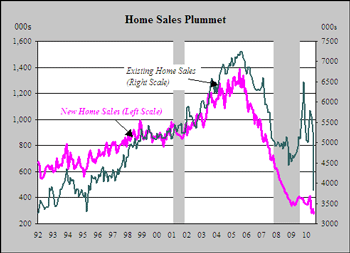
Depending on your location, home sales experienced a rise or a fall in August. Within the US, California saw an all-time low while British Columbia, Canada, had a temporary increase in home sales. California experienced a drop in many areas of real estate.

California, US – Fall in Home Sales

Home sales in California fell 2.7% from July. That drop in one month seems small compared to other statistics. Home sales fell 20% from June-July 2010 and 14% from August 2009. As well, the median price ($260,000) of California homes dropped 3% in August from July.

San Francisco Bay Area

Within the San Francisco Bay area, the median home price was $385,000. This figure is a 4.2% drop from the median price in July ($402,000). Home sales fell 1.1% in August from July and 10.9% from August 2009. 6,698 homes were sold last month compared to 7,518 homes in the previous August. This drop puts home sales in the Bay area at their lowest point for the month in eighteen years.

Some potential buyers are waiting for prices to fall further and other people are just waiting to be in a position to buy a home. Despite falling prices and low mortgage rates, joblessness is one factor that is having a huge effect on home sales. As well, first-time home buyers no longer have the Home Buyers' Tax Credit to ease the burden.

Foreclosures

While everything else was falling during August in California, foreclosures increased over July's rate. Foreclosures rose from 35.9% to 35.2%. In the San Francisco Bay area, foreclosures accounted for 26.7% of resales in August compared to 25.3% in July. Foreclosures are, however, down from last year during August – down 42.8% on average in California and 24.8% in the San Francisco Bay area.

Home sales in California fall a second straight month

British Columbia, Canada – Rise in Home Sales

Home sales rose (4.1%) in Canada during August compared to the previous month's purchases. July records indicated that it took 7.3 months to sell a home in Canada. August records point to a 6.9 month wait. Yet experts in Canadian real estate do not expect a continued rise throughout the rest of the year.

"Rising interest rates and a projected slowdown in job growth mean that the Canadian housing market is expected to continue to cool," said Georges Pahud, president of CREA.

Although August statistics might be better, sales in July were not high despite the fact that June saw considerable sales. Most buyers in June, however, were trying to purchase before the new HST (Harmonized Sales Tax) regulations came into effect in July.

August sales are probably a throwback to the incredible rate of sales in 2009. During that year, home sales rose by 66% and prices increased by almost 22%. It is hard for any system to maintain that level of activity so things have leveled off somewhat in 2010.

"I don't see the continuation of a dizzying descent in sales activity," says REA chief economist Gregory Klump.

Some changes in Canadian real estate are just marginal improvements. The average price of a Canadian home during August was $324,928. In 2009, the price came in at $324, 843. Demand has increased (1.9%) since last summer but dropped 16% from the peak in April. The Canadian Real Estate Assocaition (CREA) expects home prices to fall but not at any substantial rate.

Home sales rebound, but it won't last long, analyst says

Are Home Sales Rising Or Falling In Your Area?

Image courtesy of jpturnercompany.blogspot.com

Sep 15

Fun Money-Saving Tips for Home Owners

by Mary Teresa Fowler

Magazines and television shows are packed with money-saving information for  homeowners. The trouble is that most people do not act on the advice. Generally, the necessary changes take too much effort or don't make any significant difference.

Of course, every banker will tell you that if you look after the pennies, the dollars will look after themselves. Home owners understand the theory but putting it into practice is another story. People will respond better if the alternative is easy and a reward is in sight. The following 'fun' money tips are meant to make you smile and save money in the bargain.

Fun Money-Saving Tips

1. Practice Aromatherapy

Starting an aromatherapy routine might seem like an extra expense. After all, lavender and gardenia oil come with a cost. (Well, usually they do, unless you can pick your own wildflowers and make your own scents - and save cents along the way.)

The cost of oils though is canceled out by the benefits of aromatherapy. The scented blends can either relax or energize you depending on whether it has the perkiness of peppermint or the calming of chamomile. Home owners will be in a better frame of mind to balance that budget or stay calm and sort out their debt.

Repeat these words of advice in your relaxed or energetic moments.

"I am the creator of my own wealth and take action today toward abundance."

2. Have A Block Sale

Don't keep all the fun of saving money to yourself. Share it with the neighbours. Have a yard or garage sale that involves the whole neighborhood or apartment complex. It doesn't even matter if you don't have a yard or a garage.

'Block' sales can make everyone money, help get rid of the clutter, and unite neighbours in a common cause. Actually, people gain more than money from these events. The occasion encourages camaraderie and fosters a sense of belonging to a community.

Don't invest all your savings, however, into a post-sale celebration with the neighbors. Save a little for a rainy day. Anyway, a rainy day doesn't seem so bad when you’re surrounded by good neighbours.

3. Shop Online

Shop online and save money! Shopping seems like a painless way to save money and it can work for you. Of course, never shop beyond your means. Yet you should compare the price of online shopping to the actual cost of heading out to the department stores.

Besides your time and the inconvenience, department store shopping can mean transportation costs (maybe more than one trip), a probable stop for lunch, and maybe a salesperson who encourages you to buy more stuff. Online shopping is free from all these hassles. Often the retailers offer free shipping and, on the average, the prices are reasonable, and you don't have to leave the comfort of your own home.

Making Perfect Sense of Dollars and Cents

Actually, it makes perfect sense that saving money works best if it is part of a fun experience. Ideally, money is not meant to be a source of stress. No doubt, the lack of money for the basics of life is an overwhelming stress – one that nobody should have to endure in our world of extravagance. Yet beyond that circumstance, money should have its place, and saving it should not take the joy out of your life. If you lose your sense of joy, no amount of cents can replace it.

75 Painless Money-Saving Tips

What Are Your Favorite 'Fun' Money-Savings Tips?

Sep 10

Did The HAMP Need A Modification?

by Mary Teresa Fowler

Obama's Home Affordable Modification Program was supposed to make things better for financially-strapped homeowners. The idea was to modify the terms of their original mortgages so that they could keep their homes. They could look forward to more favorable arrangements such as lower monthly payments – maybe even more than 50% of the original amount.

Yet it seems that the Home Affordable Modification Program (HAMP) needed its own modification. Current lawsuits against the Bank of America, JPMorgan Chase, and Wells Fargo suggest that everything did not work out as hoped for some home owners. One couple claims that they kept up their end of the bargain and made regular payments according to the revised plan. Yet they still ended up thousands of dollars behind in payments and facing the threat of foreclosure.

Apparently, numerous home owners have made similar complaints about HAMP. The lawsuits focus on dissatisfaction with the treatment of home owners under HAMP and the overall performance of the program. Many home owners point to less-than-outstanding results from the Obama initiative.

The main point of contention is that permanent modifications were given to only about one third of the borrowers in trial plans. Obviously, home owners in distress prefer 'permanent' changes. They lower mortgage payments to 31% of a borrower's pretax monthly income for a five-year period.

The lawsuits allege that the lenders should have given permanent modifications to home owners on a three or four-month trial payment plan. Yet the servicers claim that the trial plans did not constitute contracts and lenders can grant permanent modifications at their discretion. The lawsuit suggests that borrowers would have been better served to find options other than HAMP to save their homes.

Actually, it isn't just home owners who are railing against HAMP.

The Congressional Oversight Panel says, "We are deeply concerned about the unacceptable quality of the denial and cancellation reasons and strongly urge Treasury to take swift action."

Why were so many home owners denied permanent modifications?

A Government Accountability Office report discovered that servicers were applying a formula inaccurately to determine if the value of modification was greater than the proceeds from foreclosure. The use of this formula would disqualify many home owners who needed assistance. Treasury claims that it has required servicers to go back and fix any errors.

Yet Treasury officials say that HAMP home owners are not promised permanent modifications. It appears that there was confusion about HAMP from the beginning. The program was brought out in haste and the guidelines changed during the life of the initiative.

Originally, servicers enrolled borrowers in trial modifications without verifying income or financial hardship. It was not until much later in the program that officials asked for verification. This lack of foresight caused some of the problems that cropped up later down the line. Now the lawyers and officials will argue about the details of the program. Meanwhile, some homeowners are now without a home.

Home mortgage modification snags spark lawsuits

Did The Home Affordable Modification Program (HAMP) Work For You?

Sep 8

How To Add Value To Your Home

by Mary Teresa Fowler

Every home owner should keep up-to-date regarding the value of their home. Today's worth is not necessarily last year's value or even last month's worth. Whether home owners have moved in recently or are planning to move out soon, they should be aware of home value.

The market - in the immediate neighbourhood and the marketplace at large - affects home value. A home owner is stuck with that reality to a point. Yet home owners can take things into their own hands and try to increase the worth of their home.

It helps to work with a skilled professional to determine home value. Home owners should review strategies that will improve their home's worth. They should understand about the current market – especially in their neighbourhood. Home owners should decipher the factors that impact the worth of their home. Although all renovations are not equal as to how they affect home value, certain home improvements can make a big difference to home value.

Adding Value To Your Home

. Spruce Up The Exterior

First impressions apply to homes as well as home owners. The house that makes a good impression will be a fast seller. It is just common sense that potential home buyers are affected by the state of a home's exterior and the outdoor setting.

Home buyers are looking for a house to suit their needs. If the exterior and surroundings are a disappointment, the stage is set for this house to stay on the market for a longer period. The home's exterior has to look its best for the "open house." The outdoor area and entryway has to be safe and the location has to look appealing to buyers.

. Remodel The Kitchen

Remodelling a kitchen is a major investment ($15,000-$80,000) as well as a true hassle and definite source of stress. Yet a kitchen renovation is one of the best things you can do to add to a home's worth. The intense effort and hefty expense can translate into a high return on a home sale.

Of course, home owners can impress home buyers without having to spend huge sums of money. Most importantly, the kitchen must have a friendly atmosphere and safety has to be a priority. Even a fresh coat of paint or a clean-up and 'declutter' session can make a dramatic improvement to a kitchen.

. Redo The Bathroom

Redoing the bathroom to reflect more comfort and extra style is a wise move for every home owner. Redecorating a bathroom can come with a substantial cost. Keep in mind that an extensive bathroom renovation is a time-consuming project.

Redoing a bathroom can involve plumbing – a costly and labour-intensive process. Yet a bathroom renovation can get a home seller a return equal to or greater than the cost of remodelling. If a major project is beyond your budget, a thorough cleaning and new coat of paint can work wonders for your home. Even simple things can help to add a slight value to your home. The difference might be the deciding factor for a home buyer.

How Do You Plan To Add Value To Your Home?

Sep 3

Pending Rise

by Mary Teresa Fowler

According to the National Association of Realtors, US pending home sales rose 5.2% in July compared to June. The statistics refer to contracts signed during July. Usually such contracts take 1-2 months to become closed deals.

"We should be seeing more sales with financing so cheap," Larson said.

Index of pending home sales rises 5.2%

Some experts do not think that the rise is very impressive but, nevertheless, the increase was a pleasant surprise. Michael D. Larson, an interest rate and housing analyst with Weiss Research, noted that only a slight increase occurred and mortgages rates are at their lowest point. Indeed, one would expect more sales with these low rates.

Low Rates – Few Takers

Since mortgage rates are the cheapest in decades, it is amazing that they cannot entice more people to buy a home. During the past week, the average rate for a 30-year fixed loan was 4.32 per cent. That rate was down from 4.36 percent the previous week and that number reflected the tenth time in 11 weeks that rates had fallen to such a low level.

Of course, many people cannot qualify for loans as there are vey strict guidelines in place. Obviously unemployment is affecting sales and some people need time to regain their confidence after the recent recession. Individuals who suffered setbacks during the economic downturn cannot be expected to bounce back at a moment's notice. In fact, it can sometimes take a decade or longer to recover lost equity.

Positive Sign – Cautious Optimism

Yet a 5.2% increase seems positive compared to the declines of the previous two months. US home sales fell almost 30% in May and another 2.8% in June. In addition, last week's rumour was that pending home sales had experienced a substantial drop in July. Of course, despite the rise in July, home sales in the coming months are not expected to go through the roof.

Industry experts expect that improvements will come at a slow and gradual pace. At present, home sales are at their lowest level in more than a decade. Keep in mind that the system is now minus some perks such as the Federal Homebuyers' Tax Credit.

In addition, the July 2010 figures are not as favorable as the statistics from the same period in 2009. It is true that the index rose to 79.4 from 75.5 in June. Yet the level in July 2009 was 98.1 – almost 20% more than the July 2010 index.

The impressive 2009 level was reached after government announced tax incentives. The index fell to 75 in April 2010 after the expiry of the Federal Homebuyers' Tax Credit. In 2001, the index reading was 100 and it increased every year for the next five years.

Obviously, it is easy to understand why some experts do not think that the July rise of 5.2% was an outstanding performance. Pending home sales improved in July 2010 but not to any significant extent. While buyers take their time, sellers wait for that final sale. Of course, real estate investors are encouraged by July's numbers.

Do You Think That US Home Sales Will Continue To Rise In Autumn 2010?

Aug 27

Basic Mortgage Tips

by Mary Teresa Fowler


Long Term

When home owners take on a mortgage, they agree to a long term commitment. Home buyers should seek out the best professional advice to help them in arranging their mortgage.

Amortization

Mortgages will amortize over a specific period of time. The usual length of a mortgage is 30 years but amortization can be as short as 15 years. On the other hand, mortgages can run longer than 30 years under certain circumstances.

Differences

Mortgages are not all the same. They differ in loan amount, terms, interest rate, and monthly payments. A mortgage must suit individual needs and finances.

Risks

Lenders assess the risk of granting a mortgage to a home owner. Before applying for a mortgage, individuals should try to be in the best possible financial condition. They should work to get their credit rating to the most favorable level. Lenders will reward a good credit rating with a low interest rate.

Market

Just like shopping for any major purchase, people should look for the best deal with their mortgage. Shop around for the lowest interest rate. If all lenders offer the same rate, they might still offer different terms and conditions.

Questions

Borrowers should ask lenders about the mortgage process. Home buyers must be as informed as possible about the steps in getting and managing a mortgage.

Pre-Approval

Pre-approval makes for an easier process down the line. Yet home buyers should not get overenthusiastic about pre-approvals. An individual might be able to get a substantial loan but that does not mean that it is a wise decision to pursue an exorbitant amount.

Down Payment

Generally, lenders require a down payment. The deposit is seen as a portion of the value of the property. If home buyers make a 30% down payment, they have a loan-value ratio of 70%.

Constant Terms

Lenders will offer constant terms to borrowers for a set time – usually ranging anywhere from six months to five years. During this period, interest rates and payments will remain constant despite market fluctuations.

Variable Rate

If a home buyer expects a drop in rates, a variable rate mortgage is a sensible choice. The interest rate will fluctuate according to the market rate.

Payments

Home buyers must be realistic about what they can afford to pay per month. Although a mortgage payment is high priority, so are food, utilities, transportation to work and school, and other basic expenses. The monthly payment should account for only 30% of the gross combined family income.

Rounding Up

Borrowers can ask lenders to round up their mortgage payment - for example, from $141.52 to $160. That $18.48 difference per month might not seem like a big deal but it can add up to thousands over amortization of the mortgage.

Skipping

Skipping a mortgage payment is not a good idea. That action adds to the interest on the outstanding balance. 'Skipping' increases interest costs on the life of the mortgage.

Mortgage Basics

What Question Would You Ask Your Lender About Mortgages?

Aug 23

A Mini-Guide to Minimalism

by Mary Teresa Fowler

Minimalism is experiencing a mini-boom – actually, more than that, a full-scale trend - in modern décor. One school of thought is that the increasing popularity of minimalism is tied to the downturn in the economy. Some think that if people can afford less stuff, minimalism might work in their favor.


MISCONCEPTION

Yet some people have a misconception about minimalism. Many believe that you cannot display any of your beloved possessions with minimalism. You can, however, easily show off precious plants or have your favourite lighting touches and still have a minimalist home.

Minimalist style does not have to mean cold and stark design. A minimalist room can reflect a soft, liveable style. Indeed, a minimalist space does not have to be just about the contrast of black and white. Minimalism can include any shade in the spectrum.

NOT JUST BLACK AND WHITE

Traditionally, the minimalist look was all about black and white. Yet modern minimalism can introduce extra elements without sacrificing the clean lines of the style. Adding various tones can help to expand an area.

ACCENT COLOR

Colors can be introduced into a minimalist room by choosing accent pieces in different hues. A turquoise throw cushion or an orange rug makes an outstanding statement. Vibrant red can be used for a bright accent in minimalist decor.

WOW

In fact, an entire wall in a room could be painted to add that ‘wow’ effect to a room. Neutrals are the usual backdrop for minimalist design. Yet bold finishes can look great when paired with black and white. Since minimalism has a calming effect, consider extending the style throughout a home. Minimalism does not have to be confined to one part of a house.

SPA QUALITY

The trick with minimalism is to create luxury with a pared-down setting. This look is possible in interior design. Go for that ultimate spa look. Less clutter will result in a more relaxed you.

Indeed, the calming effect of minimalism might explain its popularity in poor economic times. If people have extra worries added to the daily grind, it is nice to come home and escape to your minimalist retreat. This style is found in homes throughout the country and the homeowners span different economic levels.

CELEBRITY STYLE

“CDs create clutter," says Foo Fighters’ bassist Nate Mendel, who buys music digitally. "And I abhor clutter.”

Just because a person can afford tons of stuff does not mean that they will – or even should - ignore minimalist décor. Actually, even celebrities embrace the minimalist style

Celebrity minimalist: Vincent Kartheiser

Do You Like The Minimalist Style?


Aug 17

Why Aren't You Renovating Your Home?

by Mary Teresa Fowler

Maybe your home is perfect just as it is or maybe you are one of the US home owners taking on renovations. Yet you would be in the minority during the first half of this year – at least according to the second quarter reports from Wal-Mart and Home Depot Inc.

Wal-Mart

Now no need to worry too much about Wal-Mart and Home Depot! Both businesses are doing ok for themselves. Home Depot's net income rose 7% and Wal-Mart saw a rise of 3.6% from their 2009 second quarter. Yet both companies had lowered their expectations. Trimming revenue forecast is not uncommon in this economy.

Saks

Even with its luxury line, Saks had to change the way they do business and brought in more 'full price selling' (fewer sales).

The CEO of Home Depot, Frank Blake, said that his company saw weakness in the "softer housing-related activity."

Home Depot

Home Depot saw a rise in sales for items under $50. This category accounts for 20% of Home Depot sales. People were buying a little paint, some hardware, inexpensive lighting, and other low-ticket home-related products. Sales of items over $900, however, were down 5% in the last quarter. Building materials, millwork, and some seasonal big-ticket items are not selling well at this time.

Obviously, air-conditioners and barbeques are popular at this time of year. Yet the CEO of Home Depot, Frank Blake, said that his company saw weakness in the "softer housing-related activities." On the bright side, Home Depot has noticed a growth in August sales compared to July. The company is hopeful that they can at least maintain the momentum of the second quarter for the remainder of the year.

Lowe's

Lowe's Companies, Inc. is quick to point out though that consumers are cautious – especially about larger purchases. Home buying had been encouraged to a degree with the Federal Home Buyers' Tax Credit. Now with that program's expiration, not as many people are dropping by to take home a new stove or oversized refrigerator. Other home owners seem to be content with their lot – unless it's that $20 spice rack or a similar item of similar price.

US

Of course, building and renovations were 'on the go' in some states more than other areas. Florida and California were busy but Portland and Seattle weren't as much into the home improvement scene. The home owners might be in the mood but major materials are costly and cost trumps the wish for a new guest room. When home owners are experiencing financial hardship, they are quite thankful for the roof over their head. The fabulous extension can wait for another day.

Canada

Canadian retailers might not see many new stoves fly off the shelves either in the coming days. Since August came in, home sales around Toronto have dropped by twenty nine percent. Across Canada, new home sales are down by slightly more – thirty per cent. Canadians have the usual worries about prices and the market.

Renovation Project

Back in February, renovation was in the works in Canada – at least for one Canadian game developer. When asked about the next big project – what game, what sport – he replied – "I need to finish renovating my bathroom." Home Depot would like that answer!

Are You Planning Home Renovations?

Aug 16

More Than Ten

by Mary Teresa Fowler

The original Hardest Hit Fund, announced by the Obama administration in February 2010 to ease the housing crisis, included five of the "hardest hit" states. The expansion of the fund in March added five more states. On Wednesday, August 11, the US Treasury Department started the next round of help and added seven more states to the "hardest hit" list.

FIVE...THEN TEN

February's funding ($1.5 billion) was earmarked for five states in crisis - Arizona, California, Florida, Michigan, and Nevada. The second round in March ($600 million) was designed to help North Carolina, Ohio, Oregon, Rhode Island, and South Carolina.

MORE THAN TEN

Last week's additional $2 billion extended the aid to Alabama, Illinois, Kentucky, Mississippi, and New Jersey, as well as the District of Columbia. The amount of money given to each state depends on its population.

UNEMPLOYED OR UNDEREMPLOYED

The recipients of the benefits will be unemployed or underemployed home owners who cannot afford their mortgages. The money comes from the Troubled Assets Relief Program (part of the Making Home Affordable Program). Whether you agree with this approach or not, it is hard to deny the need.

CRISIS

Obviously, the crisis is fueled by the same turmoil which was the inspiration for the 'Zero Down' program or the Federal Home Buyers' Tax Credit. The aid might be dressed in different packages and address slightly different angles. Yet when you get right down to the basics, all these measures are meant to raise everyone out of the economic slump. Although many people are finding their way back, some individuals and families are still in crisis. Unemployment is the cause of much of the distress out there.

DIFFERENCE

Last week's 'Hardest-Hit Fund' is slightly different from the original assistance. This recent $2 billion in funding can be used only to help with mortgage payments for "the unemployed or underemployed" home owner. With the February funding, money was given to state housing agencies and they could design individual programs (such as foreclosure prevention programs and similar initiatives) to help their markets.

NEED

The administration believes that there is an urgent and immediate need for this latest program. California though has yet to use the first part of its funding ($700 million) but the state has now received an additional $476 million. Of course, California did come up with a plan – four new programs – from the February funding. The plan has just not gone into operation to date.

NEED FOR FAIRNESS

Besides California's unemployed home owners who are waiting for the program, people in other states are facing similar challenges. As a whole, these states did not qualify in the 'top 17' but that does little to help these unemployed individuals. Actually though, there is supposed to be a $1 billion program under development to help in the other states. The program is expected to be released under the U.S. Department of Housing and Urban Development.

If this program does not come to life, we are left with an odd scenario. Two people are facing the same challenge and one gets help and one doesn't - because of their location. Within any system, the perception of being fair is as important as fairness itself.

What Do You Think About The Expansion Of The "Hardest Hit Fund?"

Aug 10

How To Save Your Marriage & Your Mortgage

by Mary Teresa Fowler

Although the television commercials about mortgages are filled with smiling couples, life isn't always like that. Actually, maybe life even shouldn't be like that. Life is best experienced as a smorgasbord. Indeed, real life is not the stuff of commercials and every couple does not smile all the way through the mortgage process. (In fact, maybe no couple ever accomplished that).

Now a frown or two does not mean that they do not "feel the love." It is simply a fact that getting a mortgage is a stressful time for couples. Sometimes people forget that positive things in one's life come with their own type of stress. The healthy form of stress helps us to meet challenges. Understanding stress is the key to differentiating between good stress and bad stress.

Significant events in your life can bring about this natural response. During the process of getting a mortgage, however, stress levels can go though the roof. Couples can be torn apart at a time when they should be working together.

How To Save Your Marriage and Your Mortgage

1. Understand The Process

Couples must understand that the process of buying a home takes time and patience. It is normal to feel the pressure but your spouse didn't create the system. Sometimes people get annoyed with the process but complain about the socks on the floor or the dishes in the sink. Really, your partner is not to blame for the long wait, honest, trust me! Of course, couples know that, but it's easy to loose sight of what's important when your dream home is nearly – but not quite – in your grasp.

2. Don't Confuse The Dream With Reality

Without a doubt, go for your dream, but maybe you can't get it today. Anyway, a dream without effort seems rather unreal – sort of forever like a 'dream' – but a dream achieved through effort is a dream come true. Maybe you might like the 'penthouse' but your budget screams "small home". When the dreamer marries the practical person, however, a mortgage could be a nightmare but only if they lose their way. Once they remember that a marriage is about a team effort, things get back to normal in short order.

3. There Are No Winners

Don't get too focused on specific things to the exclusion of what matters in life. The – "I have to have" - statement can meet with the reply from your spouse – "But I don't want that." Individuality is admirable and nobody should lose themselves in a partnership. The problem arises, however, when one or both make it their mission to be the winner. They end up living in a house where one half of the couple may not feel at home. I forget; what did the other half win anyway?

4. Know Your Finances

If a couple doesn't know the real state of their finances at the beginning, there is bound to be stress down the road. Couples must determine if they can afford the whole package – the mortgage payments, the maintenance, and other expenses involved in buying a home. A couple might love a house, but if they can't afford it in the long term, it won't feel like a home.

Talbot Boggs wrote recently in the Canadian Press - Mortgages a tricky, scary business.

Mortgages are tricky and they can be scary but being informed gives you a definite advantage. For couples, remembering that, hopefully, the marriage will even outlast the mortgage helps them to put their priorities in order.

Daniel Huerta has some great advice for couples buying a home - The First Five Years of Marriage.

Do You Have Any Advice For Couples Buying A Home?

Tips and Advice for Home Buyers and Sellers

Find estaterebate.com on Facebook and become a fan
Follow estaterebate.com on Twitter

Category list