• Follow us

Home Ownership

Nov 1

Living with Flaws

by Mary Teresa Fowler
Home Foreclosures

Usually, the most effective way to deal with a flaw is to fix it. Yet Ohio's Attorney General is suggesting that banks and lenders take a different approach – at least in one instance. In two letters, one to Wells Fargo and one to Ohio judges, Attorney General Richard Cordray states that he does not want banks and lenders to fix flawed foreclosures.

Flawed Foreclosures

The scandal and fiasco of flawed foreclosures erupted in recent weeks. It came to light that lending officials appeared to be guilty of "robo-signing" (signing without knowledge of details) foreclosure documents. Fifty US states asked for an investigation into the lenders' use of flawed documents.

The assumption was that banks and lenders would be required to fix the flaws. In fact, a few observers had considered the whole scenario to be a deliberate action to mislead home owners. Yet even though it may seem an odd request, Ohio's Attorney General doesn't want them to fix the 'flaw' (or the 'fraud' depending on your point of view).

No Temporary Fixes

Actually, the Attorney General should not be seen as condoning the lenders' actions with his request for no fixes. He believes that the lenders should not offer a 'temporary fix' to a serious issue in a flawed system. The Attorney General does not think that it is sufficient to have another look at the documents and fix any mistakes. He feels that the banks should vacate any court order or motion based on improper paperwork. He believes that lenders should modify loans and work out settlement with borrowers.

Of course, banks and lenders do not share Mr. Cordray's opinion. Indeed, some lenders say that they are finished reviewing documents and are resuming foreclosures. If Ohio's Attorney General makes headway with his demand, it would cause total upheaval to their plans.

Generally, lenders express confidence in their policies and controls. They appear comfortable with their approach to the issue. On October 20, 2010, Wells Fargo Chief Financial Officer Howard Atkins stated that he was confident with his company's policies and controls related to foreclosures. 

"The person at Wells who signs a foreclosure file is the same person as the person who reviews the file, and it is not always done that way in the industry," explains Wells Fargo Chief Financial Officer Howard Atkins.

Confusing Story

Yet the entire situation can be confusing because there can be discrepancies between lenders' words and their actions. For example, despite the insistence of Wells Fargo Chief Financial Officer about their perfect system, they announced on October 28, 2010, that they were resubmitting affidavits for 55,000 pending foreclosures.

It remains to be seen if other attorney generals feel the same way as Mr. Cordray. More than one attorney general, however, has referred to a 2008 settlement. At that time, the Bank of America agreed to an $8.4 billion loan-modification program following a probe of its Countrywide Financial unit. The issue revolved around predatory lending practices.

The probe into the foreclosure fiasco is still being played out at the moment. Of course, the issue of flawed foreclosures is no game or no slight error, and flawed foreclosures are having huge consequences for US home owners.

Big Banks Told Not To 'Fix' A Fraud

Do You Think That Lenders Should Offer Loan Modification?

Image Courtesy of eforeclosuremagazine.com

Oct 29

Inviting Front Doors – What a Treat

by Mary Teresa Fowler
Inviting Front Doors

On this Halloween weekend, the more mysterious and creepy your entrance looks, the better kids (and adults) like it. Yet come Monday morning, lose the look! Indeed, if you are planning to sell your home, a mysterious, hidden, or overgrown entryway won't attract buyers. No dead branches or plants in the yard! Without a doubt, a horror of a door will spook your buyers.

Potential home buyers respond to well-tended property and a welcoming entrance. A neat and attractive entryway gives the impression that you care about this home. An inviting door and tidy yard can help to sell your home before the buyers even see the interior.

Added Attraction

Every house should welcome guests (and buyers) through an attractive and well-maintained front door. No scratches and scrapes or doors that won't open or close without considerable effort! The finish on doors can fade and chip after years of enduring weather conditions. Sometimes it is not necessary to buy a new door. A light sanding and a paint job might do the trick. Follow the manufacturer's instructions to choose the right type of paint.

Complementary Colors

The color of the door must work with the color scheme of your home's exterior. It doesn't have to be the same shade as the house. Yet the color should not provide so much contrast that it draws attention to the door alone instead of the entire home.

A bright color can work if your home is surrounded with brilliant flowers or blazing foliage. Generally, colors that blend with natural hues look welcoming at an entrance. Choose shades that match the natural elements (like stone or brick) of your home and its surroundings (landscape and other buildings).

Brilliant white is not an appealing choice for a front door because it is a stark color. Bright white is a cold tone - not a welcoming color. A white paint with a touch of yellow or pink is a better choice.

Your door should fit the look and style of your house. A small cottage should have a cozy look. A stately home should have a more formal entrance.

Surviving the Storm

Your door must look sturdy enough to survive a storm. You don't want potential home buyers to think that their entry door will blow down at the first gust of wind. If a home has a main door and storm door, both should look their best. If you can't afford to replace the main wood or metal door, buy an affordable and decorative storm door to make a great first impression.

Getting a Handle

When home owners put in the time and effort to make improvements to their entrance, they are 'getting a handle' on the sale. They are setting the stage for the sale of their home. Maybe that will mean having to buy new door handles.

Metal door handles can tarnish and chip over time. If yours look the worse for wear, replace them. Handles and locks are not difficult to install and it could be a DIY project. If there isn't already a deadbolt on the door, it may be a smart idea to install one. It will be safer for you while you're in the home as well as an extra safety feature that will impress buyers.

Decorative Touch

Even though the Halloween decorations are gone, potential home buyers won't mind a glorious fall arrangement or silk flower wreath on your door. It adds a decorative and welcoming touch. Inviting doors 'invite in' guests – and home buyers!

How to Improve the Front Entrance to Help Sell a Home

How to Choose a Front Door Color

Which Inviting Color Did You Choose For Your Front Door?

Oct 22

Helping Seniors Sell Their Homes

by Mary Teresa Fowler
Seniors and Real Estate

Selling a home is an emotional decision at the best of times. Of course, the obvious financial implications are added into the mix. Imagine if you're a senior who has lived in a home for 40 years or is facing a move to a seniors' home. The complexity of the situation goes up a hundred fold.

Major Decision

Factor in falling house prices and selling a home can be a huge dilemma for seniors. Yet they do not have to face this situation on their own. There is help out there for seniors who are contemplating this life-changing decision.

Getting Help

Firstly, seniors need to access trusted sources to help with selling property. Of course, the need for professional advice in this area is a 'given' and it applies to anyone in any age group who is planning to sell a home.

Real Estate Specialist

Seniors can take advantage of the expertise of various Seniors Real Estate Specialists (SRES) across the country. Everyone may not be aware that there are realtors who specialize in seniors' services. Actually, there are more than 7,000 agents in 50 US states who hold this designation.

Having this category in the industry makes perfect sense. When selling their homes, seniors have some of the same concerns as any other age group but they also have a separate set of issues. It pays for seniors to enlist the help of a Seniors Real Estate Specialist.

Falling House Prices

Today's seniors have to face the reality of falling house prices. They must confront a common issue - to sell now or wait and sell at a better time. With seniors, however, the issue becomes way more complicated because health issues or having a spouse pass away can increase the urgency of the situation.

Not All Gloom and Doom

Of course, there is always a bright spot in every market. Sometimes a senior who bought their house decades ago for a low price is surprised to see how it has risen in value over 40 years. The home's worth might have decreased in recent years but seniors are often shocked by the market evaluation. Even if seniors are pleased with the price, they still deserve to get the best advantage in today's market. An experienced realtor can guide them through the real estate process.

Their lifestyle will play a huge role in the final decision. Are they able to maintain this home in their present state of health? Are they living in a safe and comfortable environment for their age and condition? Is this the right neighborhood for them anymore? Maybe they no longer drive and need to be near public transportation. Is this the best area to live in at this stage of their lives?

Moving Forward

Seniors need the answers to a thousand and one questions. Industry experts can provide the answers. Health professionals can also advise them about the type of accommodations that would work best for them – whether a smaller home or a seniors' home. After all, selling a house is not just about leaving a home. Seniors also have to consider the cost and implications of moving to another home.

What seniors should know about selling a home

What Challenges Do You Perceive For Seniors Selling Their Homes?

Image courtesy of seniorsrealestateservice.com.au

Oct 18

Home 'Small' Home

by Mary Teresa Fowler
Home Sweet Home

Ah, home sweet home! Make that home 'small' home for an increasing number of home builders and home buyers. House construction is seeing smaller and less expensive homes because builders are not getting the same price as before for expansive, upscale properties. A few builders claim that they are not making back the construction costs.

Shrinking Size

Some builders are getting rid of homes at a loss and concentrating instead on the business of renovation. Although in uncertain economic times, neither one is a safe bet. Everything has experienced a decrease in this economy (in certain areas more than others). Everything from house appraisals to new homes to house prices is seeing a decline – and now houses are also shrinking in size.

Part of the decision to go 'smaller' is fuelled by varied events that have undermined people's confidence in the market. Such issues as foreclosure rates, flawed foreclosures, lending issues, and more, are causing a build up of anxiety among potential home buyers. Of course, home builders share their anxiety.

"It's slowing the recovery of new construction. It's sapping confidence," says Robert Filka, CEO of the Michigan Association of Home Builders

In a certain Michigan suburb, a 3,600-square-foot home with 10' ceilings, is selling at a loss for the builder at $699,000. In 2008, that same home was priced at $875,000. Within the past decade, homes in that neighborhood had sold for $2,000,000. Times have changed and builders are changing with them.

No Luxury

With unpredictable appraisals that can come in even $80,000 less than expected, luxury homes can be a problem. Appraisers have to factor in recent sales in the neighborhood. At present, neighborhood sales can include anything from a short sale to a foreclosure.

As well, home buyers are often asked for higher down payments (even up to 25%). Luxury homes may start looking less and less appealing to home buyers. Builders who have noticed that trend are opting to construct smaller homes. Maybe a less expensive home will not seem as intimidating to the potential home buyer.

Hard times force home builders to think small

Downsizing

Some people are adamant about the benefit of small houses. Cost-effectiveness, smaller mortgages, and a simpler lifestyle are a few reasons that people give for choosing smaller and less expensive homes. Even environmental reasons play into the desire for smaller homes. They use fewer resources in building and for maintenance.

Of course, buying a 'too small' home is not a wise move. A home can be as small as anything - as long as it suits your needs. If a home does not have sufficient space, it will not work for a growing family.

Perfect Fit

Yet if the size suits you, a small home might be the right choice. People have found 'small home' ownership to be an exhilarating experience. It frees up savings for travel and it frees up the precious commodity of time.

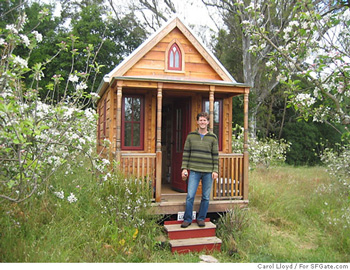
'Small home' ownership means less time spent cleaning and fewer hours required for maintenance. Smaller homes allow you to have more quality time with family and friends. Maybe though not everyone will want to go as 'small' as this home builder.

Take a look at - World's Smallest House!

Have You Been Dreaming of Building a Small House?

Would A Small Home Suit Your Needs?

Oct 13

Home Ownership - The Dream That Never Dies

by Mary Teresa Fowler
Home Ownership Dream

Home ownership – an integral part of the American dream - is the "dream that never dies." Despite a difficult economy, the dream of home ownership is alive and well and living in the hearts and mind of potential home owners. Actually, there are plenty of reasons to continue to live the dream.

Heart's Desire

Home ownership starts in the heart. The need for home and family is at the core of our being. If you are located in eastern Canada, you can even buy a home in Heart's Desire or live at your home at in Heart's Content.

Low Pricing

When house prices are at their lowest, it is the perfect time to pick up a home. Whether you are buying for the first time, moving to a bigger place, or planning an investment, buying during favorable conditions is a wise move.

No Mistake

Buying a home is hardly ever a mistake - if the buyer is aware of and prepared for the real deal. The smart home buyer checks into all important details before buying a home. They review the condition of the property and state of the neighbourhood as well as their financial obligations. When home buyers are ready for home ownership, only unforeseen circumstances can wreck their "perfect home."

Home Equity

Home equity is an invaluable asset. Home owners hope to benefit from that equity in the future. Having home equity beats paying rent - where you are just helping to feather someone else's nest.

Better Deal

According to recent studies, home owners, their families, and the community do better with home ownership. People who buy a home have a substantial investment and, according to research, better health. Children do better in school and communities grow and benefit from the participation and involvement of the home owners in the neighbourhood.

Long Term Gain

Home ownership is a long term commitment but there are long term gains for the home owner. And actually, little pain in the process, when you consider the comforts of home! It helps home owners to think of ownership in the long term. That perspective gets them in the frame of mind to live within their means and contribute to their savings.

Investment

Sometimes people buy homes as an investment. Even then, home ownership should still be seen as a long term investment. For the maximum investment possibilities, do not view home ownership in the short term.

Although many investors think about 'flipping' homes, sometimes you have to stay longer to make it pay for you. It is wise to look at buying a home as a 7-10 year investment. As well, there are tax deductions for home owners, but buyers need to be aware of the type of savings.

Home Sweet Home

Home ownership is about feelings and emotions. Of course, potential home buyers have to temper these thoughts with reality. Home ownership involves mortgages and maintenance.

You can't go to sleep in this dream. A home buyer has to be on their toes. They have to see things in the cold, harsh light of day. If home buyers are prepared for the deal, they can live the dream in their home, sweet home.

Realtors Weigh In: Is Home Ownership Still Part of the American Dream?

Are You Dreaming Of Home Ownership?

Image courtesy of enewhomesandliving.com

Tips and Advice for Home Buyers and Sellers

Find estaterebate.com on Facebook and become a fan
Follow estaterebate.com on Twitter

Category list